Why Mobile Is the Biggest Revenue Lever in Gaming (and How to Optimize It)
Mobile drives the majority of global gaming revenue, and it’s still growing. But as scale and competition increase, static rules and post-hoc optimization fall short. In 2026, the biggest mobile wins come from deciding when to act - not just what to ship.



Introduction
For years, “mobile-first” has been treated like a given. Everyone builds for mobile. Everyone markets on mobile. Everyone reports on mobile.
And yet, most optimization still treats mobile as just another surface in the funnel - not as the core revenue engine it has become.
The data from the AppsFlyer State of Gaming for Marketers - 2026 Edition makes this impossible to ignore:
mobile is not just the entry point to gaming revenue anymore. It is the revenue.
According to Newzoo data referenced in the report, global player spend is on track to reach $197B, with mobile accounting for $108B - more than PC and console combined, and still growing faster year over year.
If there is one place where optimization has the highest leverage in 2026, it’s mobile.
But here’s the problem:
we’re optimizing mobile like it’s static, predictable, and session-based.
It isn’t.
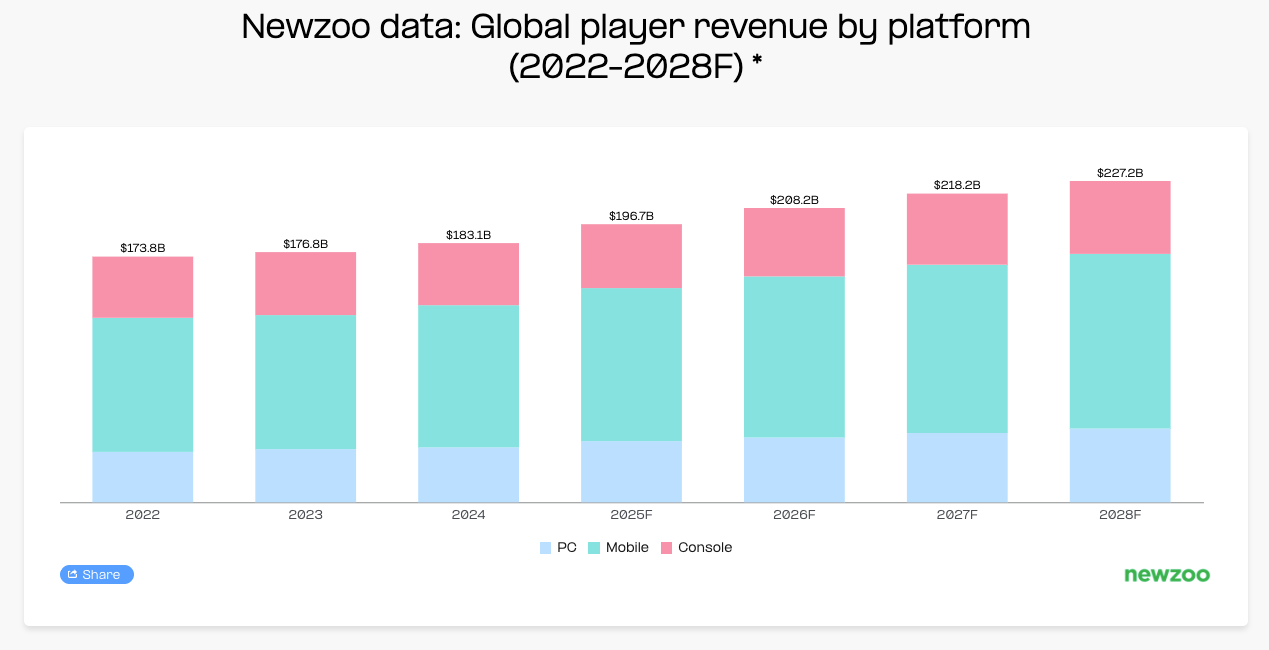
Mobile Revenue Grows - While Attention Fragments
The report highlights a structural shift happening at the same time mobile revenue grows:
- Paid install share is up 10% YoY
- Ad impressions are up 20% YoY
- Creative output exploded, with top advertisers producing 2,400-2,600 creatives per quarter
- Player journeys now span mobile, PC, console, social, and creators
Mobile sits at the center of this ecosystem, but it’s also the most volatile environment in it.
Mobile usage happens:
- Between meetings
- On public transport
- While multitasking
- In short, fragmented sessions
- On unstable networks and constrained devices
And yet, most mobile optimization still assumes a clean, focused session.
That assumption is where money leaks.
Why Mobile Optimization Has More Leverage Than Anywhere Else
In PC or console environments, engagement windows are long and intentional.
On mobile, every action competes with the real world.
That’s exactly why mobile optimization compounds faster than on any other platform:
- Small improvements in timing affect every monetization and engagement touchpoint
- Fewer interruptions reduce churn across massive volumes
- Better moments improve both IAP conversion and ad tolerance
- Retention gains multiply downstream revenue without increasing UA spend
In other words:
on mobile, when you act matters as much as what you show.
But traditional mobile stacks don’t model that.
What Most Mobile Stacks Still Get Wrong
The AppsFlyer report shows how advanced the industry has become in production and reporting - and how static decisioning still is.
Most mobile apps still rely on logic like:
- Show onboarding on first open
- Trigger paywalls after X actions
- Send pushes after Y hours of inactivity
- Show ads every Z minutes
These rules are blind to context.
They don’t know if a user is:
- Walking or stationary
- Focused or distracted
- Low on battery
- Switching networks
- Actually available to engage
Analytics can tell you what happened after the fact.
They can’t tell you whether the moment itself ever made sense.
And on mobile, bad moments are expensive.
Mobile Optimization Needs a Timing Layer
This is where the nature of mobile revenue changes the optimization problem.
If mobile is where the money is, then:
- Improving conversion design is not enough
- Improving creative volume is not enough
- Improving reporting speed is not enough
You need to improve decision quality at the moment of interaction.
That’s the layer ContextSDK is built for.
Where ContextSDK Fits Into Mobile’s Reality
ContextSDK adds real-world, on-device intelligence to mobile decisioning.
Instead of assuming all sessions are equal, it understands the moment a session happens in.
By processing hundreds of privacy-safe signals directly on the device - including motion, screen state, connectivity, and usage patterns - ContextSDK can determine whether a user is:
- Calm or rushed
- Stationary or in motion
- Likely receptive or overloaded
This enables mobile teams to move from static rules to moment-aware decisions:
- ContextDecision shows paywalls, offers, or prompts only when users are actually receptive
- ContextPush sends notifications when users are available, not just “inactive”
- Engagement adapts to real-world conditions instead of fixed funnels
Same mobile product.
Same audience.
Much higher leverage.
Why This Matters More as Mobile Keeps Growing
The AppsFlyer and Newzoo data point in the same direction:
Mobile will continue to absorb:
- More spend
- More competition
- More creative noise
- More fragmented attention
That means the cost of bad timing rises every year.
As mobile revenue grows, inefficiency becomes harder to hide:
- Users churn silently
- Ads lose tolerance
- Push opt-outs increase
- Monetization caps appear earlier
Teams that treat mobile optimization as a design or reporting problem will keep hitting these ceilings.
Teams that treat it as a timing and decision problem will keep compounding gains.
The Real Takeaway
Mobile isn’t just the biggest revenue platform anymore.
It’s the most sensitive one.
That’s why the highest-leverage optimization in 2026 isn’t:
- More creatives
- Faster reports
- Louder engagement
It’s knowing when to act.
Because on mobile, the moment decides the outcome.